SERVICE DETAIL
Skilled Woodworking With a Refined Final Finish
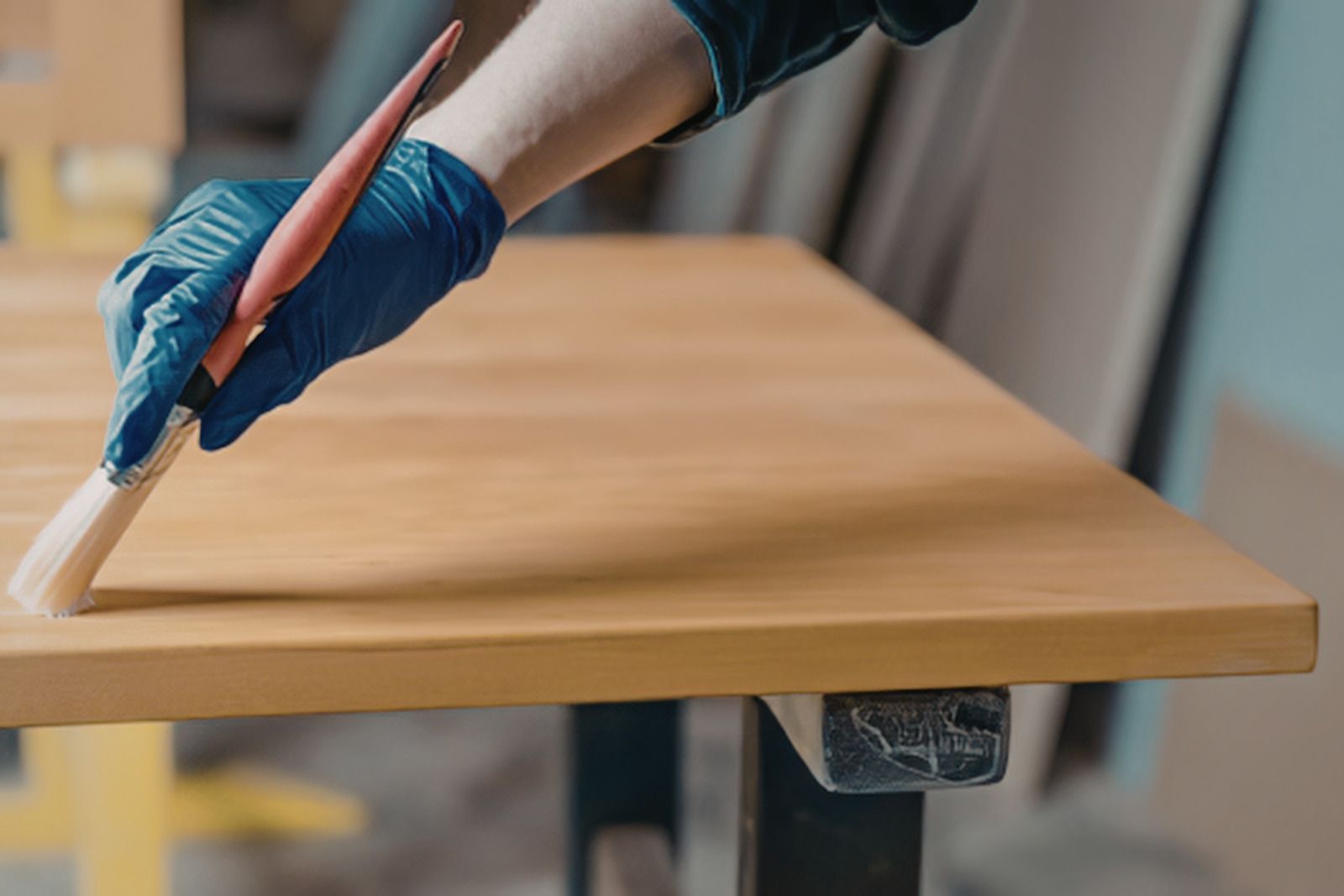
Run your hand along a well-finished cabinet door and you can feel the difference in about two seconds. That difference comes from surface preparation and coating decisions most people never see. Gresham Door & Cabinet handles the full arc of woodworking and finishing, from CNC milling and hand sanding through stain, lacquer, and protective topcoats, for homeowners, remodelers, and builders working across Gresham, OR and the wider Multnomah County area.
Our shop has been doing this for 25 years, long enough to know that a finish fails at the prep stage rather than the spray booth. Boards are inspected for grain and stability, machined for repeatable accuracy, then sanded, sealed, and coated in a controlled space. Color samples get approved before production starts.
We are CCB licensed, offer 10% off for first responders, law enforcement, and military members, and welcome shop visits. Request a free estimate through our contact page.
Our Woodworking and Finishing Services
CNC Cutting and Precision Shaping
Digital tool paths reproduce identical profiles, dados, and shelf pin patterns across an entire project without drift between the first piece and the fortieth. Complex curves, inlays, and repeated details become practical to produce and easy to reorder years afterward.
Sanding, Planing, and Surface Preparation
Flat, evenly abraded wood is what makes a coating look deep instead of blotchy. Boards are planed to a consistent thickness, sanded through progressive grits, and dust-extracted so nothing telegraphs through the sealer once the color goes on.
Custom Staining and Color Matching
Bring a drawer front, a chunk of trim, or a photograph of the tone you want. We build a stain recipe, spray it on your actual species, and hand you a labeled sample panel to check under the lighting in your own room.
Protective Topcoats and Lacquers
Catalyzed lacquer, conversion varnish, and clear topcoats each behave differently around heat, steam, and cleaning products. We match the coating to the room, then build film thickness in controlled passes so the surface resists abrasion without looking plastic.
Trim, Molding, and Custom Millwork
Knife profiles can be ground to copy a molding no longer sold, which matters in older houses where a single damaged run would otherwise force replacing everything. Baseboards, casing, crown, and wainscot panels all get milled to order.
Dovetailed Drawer Boxes and Joinery
Mechanical joints outlast fasteners every time. Dovetailed corners, dadoed bottoms, and mortise-and-tenon frames distribute load through the wood itself, which is why these boxes still slide correctly after decades of being overloaded with heavy pans and paperwork.
Why Quality Finishing Protects and Enhances Wood
Grain That Finally Gets Seen
Wood has figure that cheap coatings simply bury. Careful sanding and a stain chosen for the species let the grain read across a room, turning a functional surface into the detail visitors comment on without knowing exactly why.
A Barrier Against Moisture and Grease
Kitchens and baths punish unprotected wood with steam, splashes, and cooking residue. A properly cured finish film keeps all of that off the fibers, so surfaces wipe clean rather than absorbing stains and swelling around the sink and the dishwasher.
Color Matched to What You Already Own
Nothing looks more like an afterthought than new woodwork sitting slightly off from the flooring beside it. Matching to a physical sample, then approving that sample in your own light, removes the guesswork before a single piece is coated.
Consistency Across Every Piece
Machined components hold the same dimensions from the first part to the last, which means reveals stay even and doors line up across a long run. Reorders years later still match, since the original tool paths are kept on file.
Fewer Touch-Ups Down the Road
Surfaces that were prepared properly and coated with the right product hold their appearance instead of chipping at every edge. That translates to less refinishing, fewer service calls, and woodwork that still looks intentional after heavy family use.
One Shop From Rough Cut to Final Coat
Splitting fabrication and finishing between two vendors is where blame gets traded and schedules slip. Keeping both under one roof means the person spraying the door knows exactly how it was sanded and what the wood has already absorbed.
Complete Every Detail With Lasting Craftsmanship
Most people cannot articulate why one kitchen feels crafted and another feels assembled, but everyone senses it. The answer is almost always in the surfaces: how flat the wood was sanded, how evenly the color landed, how well the topcoat has held up under real use. That is the part Gresham Door & Cabinet cares about most, and it is why our milling and finishing happen under one roof in Gresham, OR. Bring a sample, a photo, or a piece you want matched to our contact page, and we will put together a free estimate along with a finish sample you can hold.
FAQ's
Got Questions? We’ve Got Answers.
What is the difference between lacquer, conversion varnish, and polyurethane?
Lacquer dries fast and repairs easily, which suits interior cabinetry. Conversion varnish cures chemically into a harder, more chemical-resistant film for kitchens and baths. Polyurethane offers strong abrasion resistance but is slower to recoat and harder to spot-repair later.
How long does a finish need to cure before cabinets get used?
Coatings are dry to the touch within hours and safe to handle within a day, but full chemical cure usually takes 7 to 30 days. Avoid harsh cleaners, adhesive shelf liner, and heavy scrubbing during that curing window.
Can you match a stain to trim I already have?
Yes. A physical sample beats any photograph, so bring a piece of the trim or an unused door. We test recipes on the same species you are using and confirm the match under your own lighting conditions before production.
Should wood be sprayed or brushed for the smoothest result?
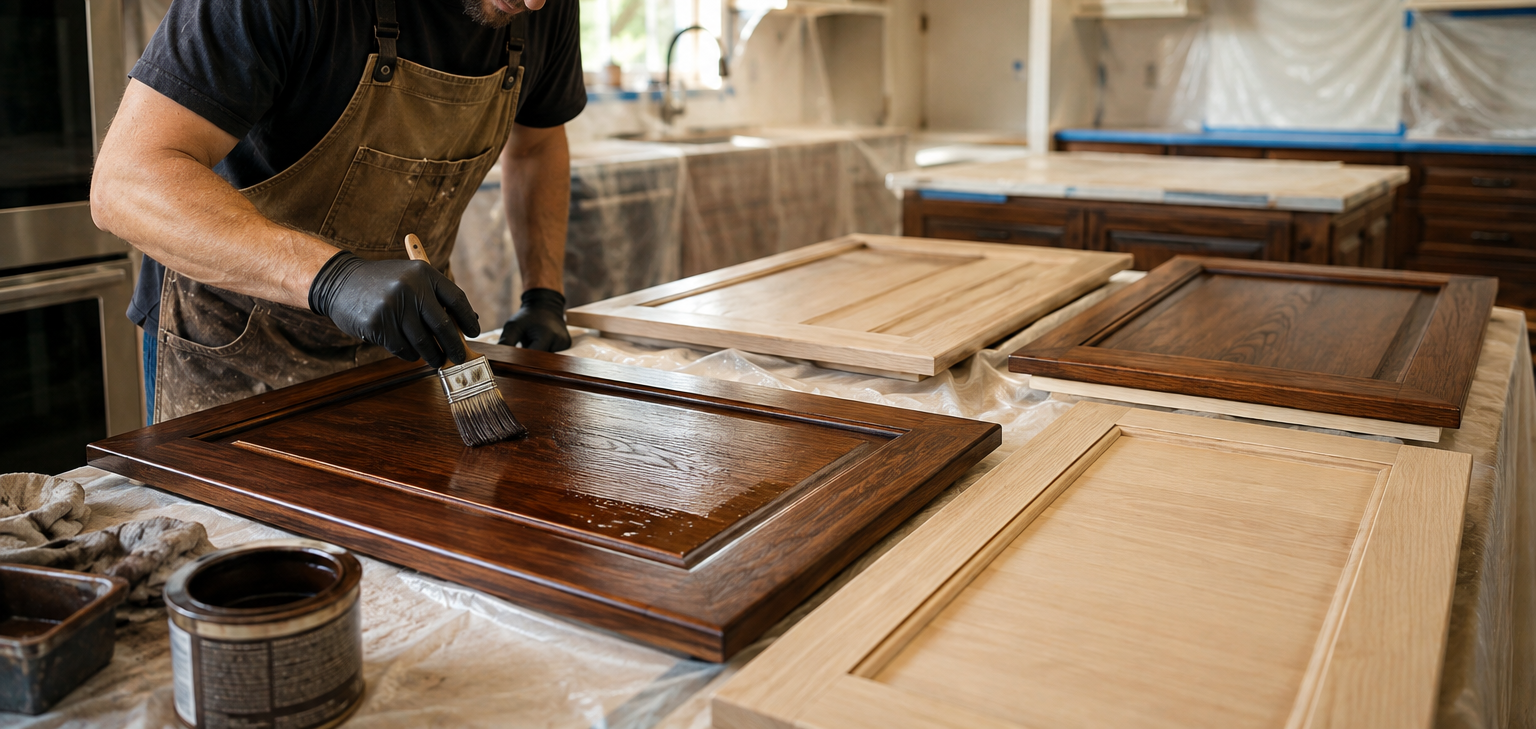
Spraying lays a thinner, more uniform film with no brush marks, which is why cabinetry and doors are finished that way in a shop. Brushing suits touch-ups and site work but rarely matches a sprayed surface for evenness.
Why does the same stain look different on two boards?
Density and grain vary even within one tree, so open-pored areas drink more pigment than tight ones. Conditioning the wood first, or switching to a dye or toner, evens the result when blotching would otherwise show badly.
What sheen works best in a kitchen?
Satin is the usual answer because it hides fingerprints and minor surface irregularities while still cleaning easily. Matte reads softer but shows handling marks near pulls, and gloss looks striking on furniture yet magnifies every flaw around a range.
Can existing cabinets be stripped and refinished instead of replaced?
If the boxes are sound and the doors are solid wood, refinishing is realistic. Gresham Door & Cabinet strips, sands, and recoats them in our Gresham, OR shop, though thin veneers and damaged particleboard usually make new doors the better call.
Does CNC cutting replace hand craftsmanship?
It handles repetition, not judgment. Machines cut identical parts accurately and quickly, and our team then eases edges, fits joints, sands surfaces, and adjusts hardware by hand, because those steps still depend on someone feeling when the work is right.